New book: Communities of Care in Migration

I am delighted to announce that my latest book has been published with Palgrave Macmillan. An edited collection, on the topic of Communities of Care in Migration, the book explores local and transnational relationships and practices of care as collectively produced and enacted in the lives of migrants in diverse contexts, including the USA, Canada, Australia, South Africa, Asia, Europe, and online.

The collection brings together chapters by leading and emerging scholars from a range of disciplinary backgrounds and also includes contributions from community organisers and practitioners, offering a unique, praxis-informed perspective on the topic of how migrants care for each other.

I am proud to have curated this collection, alongside my co-editor, Valerie Francisco-Menchavez, which highlights migrants’ strategies of survival and solidarity, as well as the joy and friendship that sustains a life in migration. The book is available to buy now (or ask your library).


“This important new book reminds us that economics is only part of the story of human movement. As the rich and thoughtful chapters demonstrate, migrants participate in communities of care that are always complex, sometimes subversive and often gendered. With examples from across the world, this collection offers an insightful discussion of ethics, politics and emotions that is a valuable contribution to our understandings of migration, care and community.”

—Raelene Wilding, Professor of Sociology, La Trobe University, Australia


“Francisco Menchavez and Williams Veazey’s edited collection is a masterpiece. It brings together scholars and scholar-activists from different global regions to unpack the varied manifestations of “communities of care” globally. For the editors and authors, communities of care are multi-directional, relational and political, and emerge in opposition to long-standing structural inequities. This volume is a must-read for those who are interested in seeing other ways of doing and being in a world that is increasingly dominated by authoritarian and fascist values.”

—Ethel Tungohan, Canada Research Chair and Associate Professor of Politics, York University

Call for chapter proposals: Communities of Care in Migration

I’m working on an edited collection with my esteemed colleague and excellent scholar, Valerie Francisco-Menchavez at San Francisco State University. We have secured some wonderful contributions already and we are looking to cast the net far and wide to complete the collection. Please see the details below and get in touch if you need any further information. Submit a title, 300-500 word abstract and brief biographical note to vfm@sfsu.edu by April 15. First chapter drafts will be due in October 2024 (subject to discussions with publisher).

About the Collection: 

This interdisciplinary collection brings together leading and emerging scholars of migration and care from across the world. Separately and together, their contributions explore the often-unrecognised labour of care given and received between migrants, organised under the concept of “Communities of Care in Migration.” The collection takes a new and fresh look at migration from the perspective of migrants and their communities. Building on the concepts of horizontal care (Francisco-Menchavez), relational mobility and relational settlement (Williams Veazey), the collection explores local and transnational relationships and practices of care in the lives of migrants in diverse contexts, including the USA, Australia, Asia, Africa and Europe. 

Migration disrupts, fractures and re-shapes migrants’ social infrastructures, requiring migrants to make new connections, re-building communities and nurturing new relationships. At the heart of this core migrant practice is the concept, and labour, of care as collectively produced and enacted. In focusing on “communities of care”, we de-centre the often linear and hierarchical organization of care work and care practices that describe the labour and bonds between kin within a biological, normative, and spatially bound definition of family. We ground this work in the scholarship of feminists of colour (Hill Collins), in which care work is expanded beyond the narrow confines of a biologically determined family formation, and beyond formal, paid care work, and is to be found (instead or as well) located in networks of peers, friends and allies. We aim, therefore, to highlight the horizontal and multidirectional care among migrants (Francisco-Menchavez, Williams Veazey). The often-unrecognised labour of care given and received between migrants manifests in the thick and complex networks or webs of care that many migrants create and sustain. In this way, communities of care disrupt narratives that focus on assimilative ‘parallel societies’ or ‘immigrant enclaves’ on the one hand, and migrants as recipients of state/voluntary care from the receiving/host community, on the other.    

Migrants’ communities of care are incommensurate to formal metrics of capital and politics and are often brought about by conditions of dispossession, displacement and violence. Yet these structural constraints, including gendered migration patterns, racialised labour, transnational family separation, and inequitable access to services and welfare, provide a clear basis for points of unity, fostering relationships of solidarity and political organizing (Tungohan). Rather than networks to merely exchange resources for upward mobility and assimilation, this volume uplifts creative strategies of survival that make room for friendship and joy, mutual aid and radical politics, network- and movement-building across digital and creative modalities. These reorganized care connections can produce new identity formations and subjectivities informed by local, national and transnational contexts.  

Although our primary focus here is on solidarity, joy, and survival, it is also clear that in these complex entanglements of care and interdependence, there also exist practices and relationships of harm, exploitation and neglect. Indeed, at times, practices and relationships that appear to be ‘caring’ may reproduce, obscure or naturalise harm, thereby perpetuating the very inequalities and injustices they purport to address. The collection will thus also include consideration of the darker underbelly of migrant communities. 

Aimed at scholars of migration, care and transnationalism, this book provides new intellectual insights and brings together scholars working in diverse geographical and disciplinary contexts to provide a fresh look at migration in action.    

Call for chapters  

We invite chapter proposals on the topic of ‘Communities of Care in Migration’ that speak specifically or broadly to the framing outlined above.  We particularly welcome proposals on the following topics, but are very open to alternative proposals:  

  • Methodologies for researching migrant communities of care  
  • Historical approaches to communities of care in migration  
  • Communities of care amongst older migrants, or intergenerational communities  
  • Communities of care based around digital platforms  
  • Spaces and places of care  
  • Resistance and activism: Politics, advocacy, care activism  
  • Chapters focusing on geographical locations currently underrepresented in migration literature, including the Gulf states and Africa. 
  • Resistance and activism: Politics, advocacy, care activism  
  • Community responses to precarity and/or crisis  
  • Joy, exuberance, humour, creativity in migrant community  
  • Redefining care, care work and community in migration  
  • Gendered communities of care  
  • Intersections of care and harm in migrant communities

About the editors: 

Dr. Valerie Francisco-Menchavez is Associate Professor in the Department of Sociology and Sexuality Studies at San Francisco State University where she is committed to teaching, organising and conducting research on the topics of Filipina migration, transnational lives, family-making in the United States and in the Philippines. Her first award-winning book entitled, The Labor of Care: Filipina Migrants and Transnational Families in the Digital Age (2018), explores the dynamics of gender and technology of care work and intimacy in Filipino transnational families in the Philippines and the U.S. Through an examination of neoliberal immigration policies and market forces, Francisco contextualises the shifts in the long-standing transnational family formation in the Philippines. Her forthcoming book project, Caring for Caregivers: Filipina Migrant Workers and Community Building during Crisis is an examination of the lives of Filipina caregivers in the San Francisco/Bay Area before and during the COVID-19 pandemic, and more importantly, the solidarity built among them.   

https://socsxs.sfsu.edu/valerie-francisco-menchavez

https://www.linkedin.com/in/valerie-francisco-menchavez-a0a062211

Dr. Leah Williams Veazey is ARC DECRA Research Fellow in the Sydney Centre for Healthy Societies, School of Social and Political Sciences at The University of Sydney, Australia. Her research centres around migration, care, health, motherhood and digital cultures. Her first award-winning book entitled, Migrant Mothers in the Digital Age: Emotion and Belonging in Migrant Maternal Online Communities (2021), explores the experiences of migrant mothers in Australia through the lens of their online communities, arguing for the importance of examining relationships among mothers and migrants as they move, settle and establish themselves in a new country. Building on this work, her new project uses the concept of relational mobility to explore the transnational and local intersections of care and work in the lives of migrant healthcare workers and students in Australia. Dr Williams Veazey co-convenes The Australian Sociological Association’s Migration, Ethnicity and Multiculturalism Thematic Group, and co-leads the Migration, Im/mobility and Belonging Research Theme at the Sydney Centre for Healthy Societies. She is Associate Editor at the Australian Journal of Social Issues, and an Associate Investigator at the Australian Research Council Centre of Excellence for the Digital Child.  

https://www.sydney.edu.au/arts/about/our-people/academic-staff/leah-williamsveazey.html

https://www.linkedin.com/in/leahmouse


Australian Research Council Discovery Early Career Researcher Awards 2024 Announced

In September 2023, the Australian Research Council announced more than $86 million in funding for early career researchers. One of those early career researchers was me. My project, Future-proofing Australia’s Care Economy: A Relational Mobilities Approach, was awarded over $400,000. The study will  investigate the experiences of Australia’s migrant and mobile health workforce in the context of severe worker shortages worldwide. It will explore how healthcare workers’ family relationships and informal care responsibilities shape their migration decisions, experiences in the workplace and plans for the future. Expected outcomes include a comprehensive evidence-base about healthcare workers’ experiences of mobility, care, knowledge and skills to inform sustainable and person-centred policy solutions. The project should yield significant benefit by maximising Australia’s capacity to attract and retain a highly mobile workforce and their transnational knowledge and expertise to meet Australia’s growing care needs.

Photo by Kamaji Ogino on Pexels.com

My book won an award!

At the 2022 TASA Conference, my book Migrant Mothers in the Digital Age won the 2022 Raewyn Connell Award for Best First Book in Australian Sociology.


Migrant Mothers in the Digital Age is available to buy

The book is now available in paperback, as well as in hardback and e-book format. It has been reviewed in Feminism & Psychology and the Journal of Sociology.

My book is here!

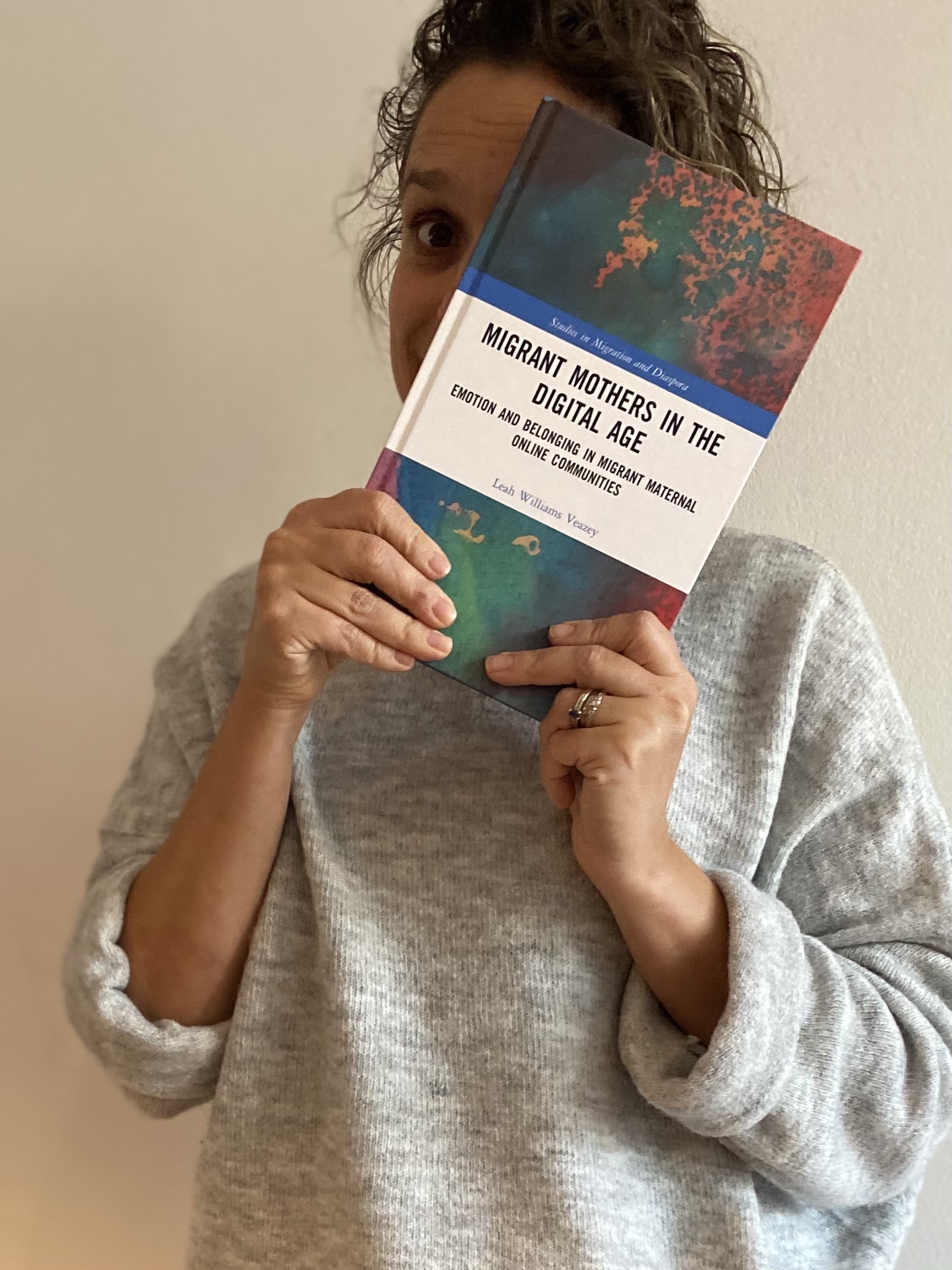
An excited author photo

It has been a long time coming but today I got my hands on a physical copy of my new book, Migrant Mothers in the Digital Age: Emotion and Belonging in Migrant Maternal Online Communities.

The book is published by Routledge in a hardcover and e-book version. If you would like to read it and have trouble getting hold of it, please send me a message (my Twitter profile is probably a good route).

The book is based on my research with migrant mothers living in Australia who participate in online communities created by and for migrant mothers.

It looks at how migrant mothers build relationships with each other through these online communities and find ways to make a place for themselves and their families in a new country, and it highlights the often overlooked labour that goes into sustaining these groups and facilitating these new relationships and spaces of trust. 

Anyway, you can read more about the book in the link above, or get in touch if you have any questions.

This is a book which provides a new and impressively researched insight into the migration story, one which though focusing on the digital culture of 2021 at the same time resonates with the experiences of migrant mothers in centuries past. Migrant Mothers in the Digital Age deserves a place on the list of all those engaged in researching and understanding the role and experiences of motherhood and the processes of settlement in the female migrant experience.

Dr Anne J. Kershen, Honorary Senior Research Fellow, Queen Mary University of London

Mama’s away at Christmas

End of year traditions and festivities seem to awaken the dormant beast of homesickness in even the most settled of migrants, let alone the new arrivals. Whether it’s Christmas, Thanksgiving, Chanukah or another end of year festival, the sense of distance from “home” and loved ones seems amplified.

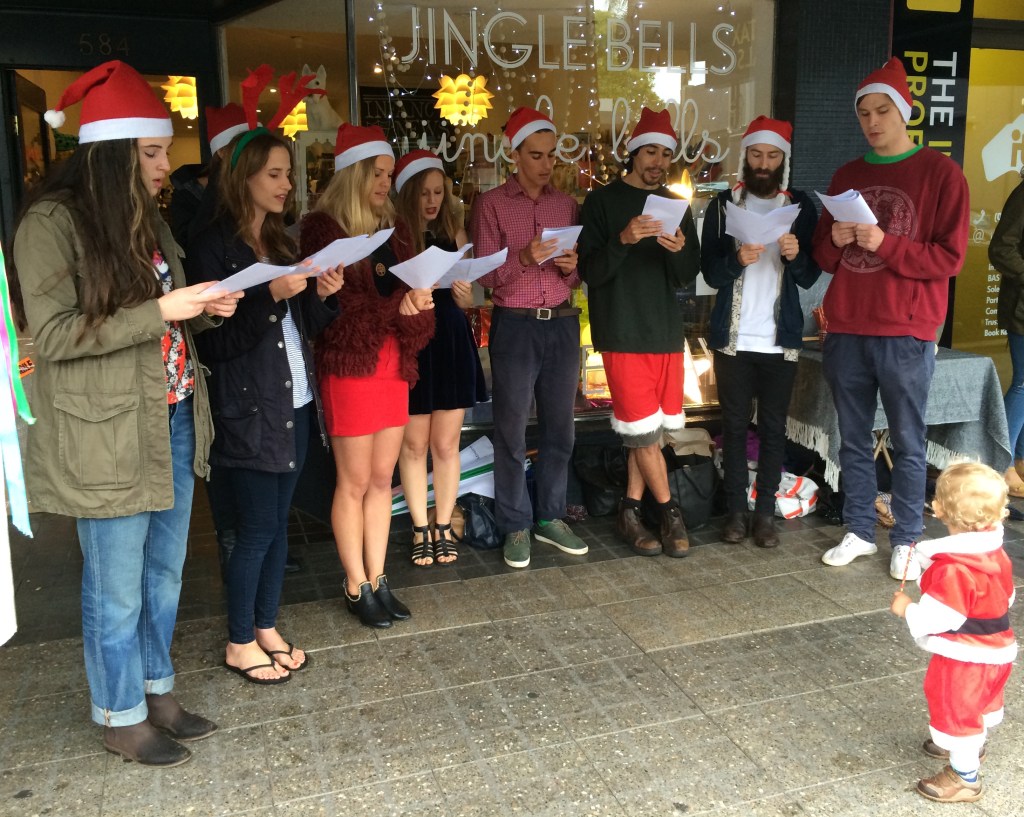
carols on darling
Carols in sandals and Santa shorts…

Of course, others may raise a silent cheer that they can escape the stress, obligations or family entanglements the “festive” season can bring. Nevertheless, in the expat mothers’ Facebook groups and on twitter, I’ve seen numerous posts expressing deep sadness about not being able to continue family traditions, about being far from loved ones and overall a sense of it just not feeling “right” – especially for us northern hemisphere types contemplating the festive season in sandals rather than snow boots.

Mums online talk about “putting a brave face on” for the kids, trying to find ways of creating new rituals for them, or incorporating some of their favourite elements from their home traditions.

For me, those feelings are more muted, mostly because I actually spent many happy Christmases in Australia as a child, visiting my mum’s family. So Christmas on the beach brings back as many childhood memories as a Christmas walk by the River Thames. And with parents arriving next week, and my father in law in January, we won’t be yearning for family either.

Having said that, here are a few things that appear completely weird to me about Christmas as a midsummer festival:

  1. Mulled wine. I don’t think I’ve ever seen it here and for good reason. Even the thought of drinking hot wine brings me out in a sweat! The smell of cloves and cinnamon conjures up a sensation of cosy kitchens, not breezy, sun-drenched verandahs.
  2. Father Christmas in fur-lined clothes and a massive beard.

    santa at the fish markets
    Even elves have to buy their Christmas prawns somewhere…

    Spare a thought for the poor guys dressing up to bring sweaty joy to kids’ parties everywhere. At least the shopping centre Santas get air-con.

  3. References to snow. Snowy carols, snowflake decorations, inflatable snowmen. It all just makes me want to break out into Olaf’s “In Summer” song from Frozen.
  4. Hot turkey dinners. Who wants to have the oven on all day in 30+ degree heat? Lots of people do opt for seafood and salads but the roast lunch persists. Personally, I’d be afraid of sinking during my afternoon ocean dip if I ate all that, not to mention Christmas pud.

How about you? Does the “festive” season awaken the dormant homesickness in you? What do you miss about Christmas (or Chanukah, or Thanksgiving…) at home? What do you embrace about the celebrations where you are? Have you incorporated any of your home traditions? 


As well as being a mother away from home at Christmas, I am researching migrant mothers and online communities for my PhD. Find out more at the Mamas Away Facebook page and take my survey.

If you’re in Australia, I’ll be interviewing mothers in 2016, so if you’re interested, let me know (my email address is at the end of the survey). I’m particularly looking for mothers who have set up or who run online groups for migrant/expat mothers in their local area, and also mothers who use online groups and networks. Don’t be shy; get in touch!

Seychelles Mama


Balancing books and bubs: a challenge

This post is part of the #HDRblog15 challenge, started by Deb aka the édu flâneuse and inspired by the Thesis Whisperer’s MOOC on How to Survive Your Phd. Which explains the sudden blog activity after a period of winter hibernation. It is also a report of a workshop I ran for HDR parents at the University of Sydney.

Baby watches on as mother types on laptop
Image credit: Brandon Harvey https://flic.kr/p/nnBF8

When I saw the information about a grant scheme for student-led activities to improve the academic experience of HDR students, I immediately thought of organising a workshop for people balancing parenting with postgraduate research degrees. For some reason I kept stumbling across parents like myself, but never seeing our experiences reflected in official literature, support services provided by the postgrad student association, or any of the narratives circulating about postgraduate study. Through my membership of the fantastically supportive PhD and ECR Parent Facebook group (and our local PhD Parents: Sydney spin-off) I knew there were many people struggling in isolation and frustration to reconcile their dual roles.

With speakers secured, including junior and senior academics who had combined PhD research with parenting, as well as current PhD parents, registrations for the workshop climbed steadily towards our limit of 50. Participants came from across the various USyd faculties and beyond. Although a diverse group in many ways, it was glaringly obvious that all but one participant (plus one speaker) were women (plus two small babies). I’ll leave you to speculate about why that might be.

The main aims of the workshop were to (a) reduce isolation among postgraduate student parents by putting them in a room together and creating support networks; (b) raise visibility and awareness of HDR parents and the challenges we face; and (c) create change to improve the experiences of current and future HDR parents.

Child sleeps in library
Image credit: Amy Bilimankhwe

On the first aim, the sense of relief at finding oneself in a room full of people in the same boat was almost palpable. At times emotions ran high as women shared their stories of the struggles and joys of PhD parenting. Childcare, finances, relationships, and academic structures and cultures that fail to take account of parenting responsibilities were all points of common ground among participants. Discovering that some seasoned and successful academics had also had rocky paths to their PhD completion, due to their parenting responsibilities, was a revelation to some, and an inspiration to most.

In terms of raising awareness, the promotion of the event certainly raised parents’ visibility among our peers and departments. Academic and administrative staff expressed support for the workshop and a desire to see them repeated and embedded in future student support activities. SUPRA, the postgraduate student association, supported the workshop and has already started to look into substantial improvements to their support for parents.

The workshop revealed (or inspired, it’s difficult to tell) a burning appetite among HDR parents for advocating for change. Along with increased visibility, participants made recommendations around childcare (particularly casual or occasional care, perhaps along the lines of this hotdesking plus creche arrangement; financial support; best practice guidelines for supervisors and event organisers; institutionally embedded support networks and more. A report on the recommendations is forthcoming (once I get some pesky deadlines for PhD work out of the way).

Postgraduate student parents talk to each other around tables
The workshop in full swing

While we’re still mulling over the outcomes of the workshop, I can heartily recommend organising something similar at your university. Simply the chance to be in the same room as other parents and share stories with people who understand was worthwhile. And it might be the start of some real change.

What is support like for postgraduate research parents at your institution? Have you ever organised a workshop like this? How do you think universities could better support HDR parents?


Why do we expect so little? Reflections on a week of reading motherhood theories

This is the final of three posts that I am re-blogging from my tumblr, where I have been reflecting on my return to academia and the first few months of my PhD research. This post was written in April 2015.
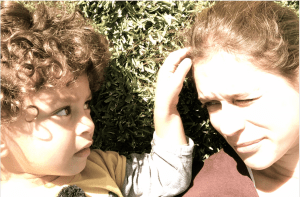
A mother and her young son, looking at each other

I’ve spent the week steeped in academic texts about theories of mothering and ideologies of motherhood. As well as a slight headache and tired eyes (I’ve mostly been doing my reading on screen), I’ve come away from the week with a noticeable sense of lightness, like a weight has been lifted off my shoulders.

As a politically aware, feminist mother of two, who believes that what we accept as normal and natural is socially constructed, I thought I was in a good position to resist some of the social pressures of motherhood. I believed I was finding my own path through the wild woods of mothering.

But spending the week immersed in maternal theories (particularly this anthology by Angela O’Reilly) has driven home just how socially constructed our mothering realities are. Not just that, it has also made me aware just how many of my assumptions and expectations have been formed by contemporary dominant mothering ideologies. Reading theorists who place Black, Latina, lesbian, indigenous, and disabled mothers at the heart of their motherhood theories, threw into sharp relief how much of our (my) understanding had been shaped by white middle class late C20th-early C21st experiences of motherhood.

I know this is nothing particularly revelatory but that’s my point. I was surprised that I was surprised. I had accepted more of my reality as a given than I had realised. I had judged other women’s decisions by an ideology I didn’t really realise I had (and I’ve tried so hard to resist making judgements of other mothers). And I had judged myself.

The contradictions involved in the doctrines of “intensive mothering” and “good mother” ideologies mean that success by these standards is literally unachievable by any mother anywhere. And yet the expectations and assumptions are so ingrained in me (even though I consciously resist those I am aware of) that I still use them judge myself and others. They are at the root of the “mothers’ guilt” we’re all meant to constantly feel.

On top of interrogating the social construction of these expectations, certain concepts have jumped out at me and fired a desire to change the way I think about my own mothering.

Firstly, Andrea O’Reilly’s explanation of feminist mothering, which has given me an alternative way to think about my mothering practices:

“A theory of feminist mothering begins with recognition that mothers must live her life and practice mothering from a position of agency, authority, authenticity and autonomy. A feminist standpoint on mothering affords a woman a life, a purpose and identity outside and beyond motherhood; as well it does not limit childrearing to the biological mother. Likewise, from this standpoint, a woman’s race, age, sexuality or marital status does not determine her capacity to mother. A feminist theory on motherhood also foregrounds maternal power and confers value to mothering. Mothering, thus from a feminist perspective and practice, redefines motherwork as a social and political act.”

In some ways, I cannot believe that this quote sounds radical, but in the context of today’s mothering ideologies, it really does.

Secondly, a concept alluded to by O’Reilly in that quote but explored more fully by bell hooks and Patricia Hill Collins, that of collective mothering and othermothers. The notion that other people can provide mothering care for my children and seeing that not as an “outsourcing” of care but a legitimate way of providing a caring network (or community) in which to raise our children. Raising our families in isolation places huge pressures on women. And while women of colour (e.g. bell hooks and Patricia Hill Collins in the same anthology) have pointed out that raising children in isolation has often not been an option for Black women, perhaps it’s time for other women to admit that it’s not really an option for us either, given the huge toll it takes on women’s lives, our mental and physical health.

Linked to that is the role of fathers. This post was written after a good night’s sleep because my husband volunteered to take our children away for the night, specifically so I could sleep (and work). Men need to step up more into roles of active fatherhood, women need to allow them to do so (or demand they do) and society needs to restructure to allow and encourage men to do so. There are some specific moments of mothering which are distinctively experienced by women, for example pregnancy, childbirth and breastfeeding, and these should be respected and valued. But you can be a mother without having done any of these and they really aren’t an excuse for men to play less active roles in the lives of the children they father (where that’s possible and appropriate and not made dangerous by violence for example). Where there are two (or more) parents, it is not inherently the case that one of them (the mother) should be taking ultimate responsibility for the childrearing.

While more men claim to share parenting equally, or think they want to before they actually have children, statistics tell us that the vast, vast majority of parenting is still undertaken by women, even in households which were not overtly structured along gender lines before children came along. So it seems men can choose to be active fathers, within the constraints of socioeconomic policies and cultural expectations, but the default is that childrearing is done by mothers, because they are women.

“Men will not share equally in parenting until they are taught, ideally from childhood on, that fatherhood has the same meaning and significance as motherhood.” – bell hooks

In an article elsewhere, O’Reilly tells an anecdote about the conference she attended on empowering mothers, where one of the leaders suggested the delegates (est 90% women) should email photos to illustrate the state of disarray their homes would be in because they had been away for two days. The delegates laughed, bragged about how messy their homes would be, what state their children would be in, and most of all, accepted the premise. As O’Reilly asks: Why do we expect so little? Or, to extend her question: why do we expect so little of others and so much of ourselves?

In decades to come, I think we will look back at this period as a deeply conservative one for mothers. I hope we can do something to change that for the mothers who come behind us.
Academic hyperbole & new student inductions

This is the second of three posts, copied from my tumblr, where I have been blogging intermittently about my return to academia. This was written in March 2015.

A picture of bear in water, looking like he's thinking
Always thinking… even in the bath

I’ll never forget my first week at university when my Director of Studies told us that to be successful in our degree, we would need to live and breathe our subject. “You should be conjugating verbs in the bath,” he said.

Well, as the holder of a first class undergraduate degree, I can tell you I never conjugated a verb during any ablution process.

Sitting in my induction lectures today for new PhD students, I noticed a lot of the academic staff treading that familiar path.

“Your PhD will take over your life.”
“You’ll never stop thinking about it.”

Some speakers made vague references to mental health and one even mentioned balancing home life with your research. But – like my undergraduate tutor – they all seemed to buy into this idea that academic work, specifically academic degrees, are all-consuming monsters, to which you need to dedicate yourself heart, body and soul.

At this point, at the very beginning of my PhD, I’m not qualified to say whether that will be the case. But I find it interesting that it is predominantly the academic staff who are propagating this view of study. The students I have spoken to tend to have a more balanced (dare I say realistic) view of it. And I really don’t think it’s healthy to be maintaining this narrative of the PhD (or even BA) as an all-consuming beast that will chew you up and spit you out as soon as look at you.

Realistically, most of us have lives outside our studies. Some of us have children, families, caring responsibilities. Some of us have part-time or full-time jobs. Some of us have health issues or disabilities that will affect the energy and time we have to dedicate to our research. Why not recognise that and talk to us realistically about how we make it work? Instead of setting up unrealistic expectations about spending every waking minute thinking about French verbs or ethnography, talk to us about how we remain happy, healthy human beings who can manage our other responsibilities and still succeed academically. That’s the real challenge.

photo credit: Scratching bear via photopin (license)

Re-entering the ivory tower

I’m going to start this blog with a couple of posts from my tumblr, which is where I started blogging about my new life in academia, or rather my reconnection with academia. This post was written in February 2015.

A picture of books in a library
Honey I’m home!

Nearly twelve years stand between now – the start of my PhD years – and the happy day I filed my MSc dissertation in a drawer and hoped never to have to look at it again.

Much has changed for me personally. I’ve had a decade-long career in charity communications, leading up to specialising in online communities and social media. I can now look at my Master’s dissertation without wanting to vomit. I’ve had two children and moved to the other side of the world (London-Sydney). Family has brought complicated jugglings of responsibilities (seminars that run from 4-6pm, you officially suck), total exhaustion and of course deep joy.

One of the reasons I didn’t pursue a PhD straight after my Master’s was down to my fear of isolation and the potential impact on my mental health. Too many days sitting alone in the British Library had strained my inner resources and my relationship. Nowadays the idea of a few hours to myself, surrounded by books, papers and other scholars, feels like a cool drink on a hot day. I know it’s still going to be important to actually speak to people and make new contacts and maybe even friends, but right now solitude is a novelty and one I can emerge from into the chaos of family life whenever I want.

Returning to familiar conceptual ground and observing how the field has developed in my absence has been interesting too. The other day my supervisor chucked around the word “hybridity” almost as a joke and I was immediately transported back to the early 2000s and the air conditioned chill of the library. It’s been a good reminder that theories are always contested and will ebb and flow in popularity and relevance – an important lesson for students and early career researchers.

So I’ve changed, the field has changed, and of course academia itself has changed. The plethora of material available online! (Students today may never know the ‘joy’ of squinting at microfiche in a darkened room). Widely available referencing software! The increased circulation of ideas and serendipitous connections brought about by the advent of social media! Not to mention the development of whole new fields like digital sociology and digital humanities.

I’m not sure early careers in academia have ever been a picnic. I remember my dad, a careers advisor, having endless discussions with newly minted PhD-holders, unemployed and disillusioned. It’s another reason it took me a while to come back to academia. But I do think the precariousness of early academic careers has increased and can stretch out for many years. I sense the fear in the students and the despondency of the newly graduated, especially the women wondering how they’re ever going to fit in starting and raising a family without any steady employment prospects.

I don’t want to end on a down note, though, so I’ll just add that I am genuinely excited to be back amongst the books and the scholars. Where it’s going to take me, I don’t know yet, but I’m glad to be here.